Home Equity Loans in Singapore

Head of Research
|
Updated 06 May 2026
|

Fact-checked

Disclosure

Glossary

Useful Resources

Head of Research
Updated 06 May 2026
|

Fact-checked

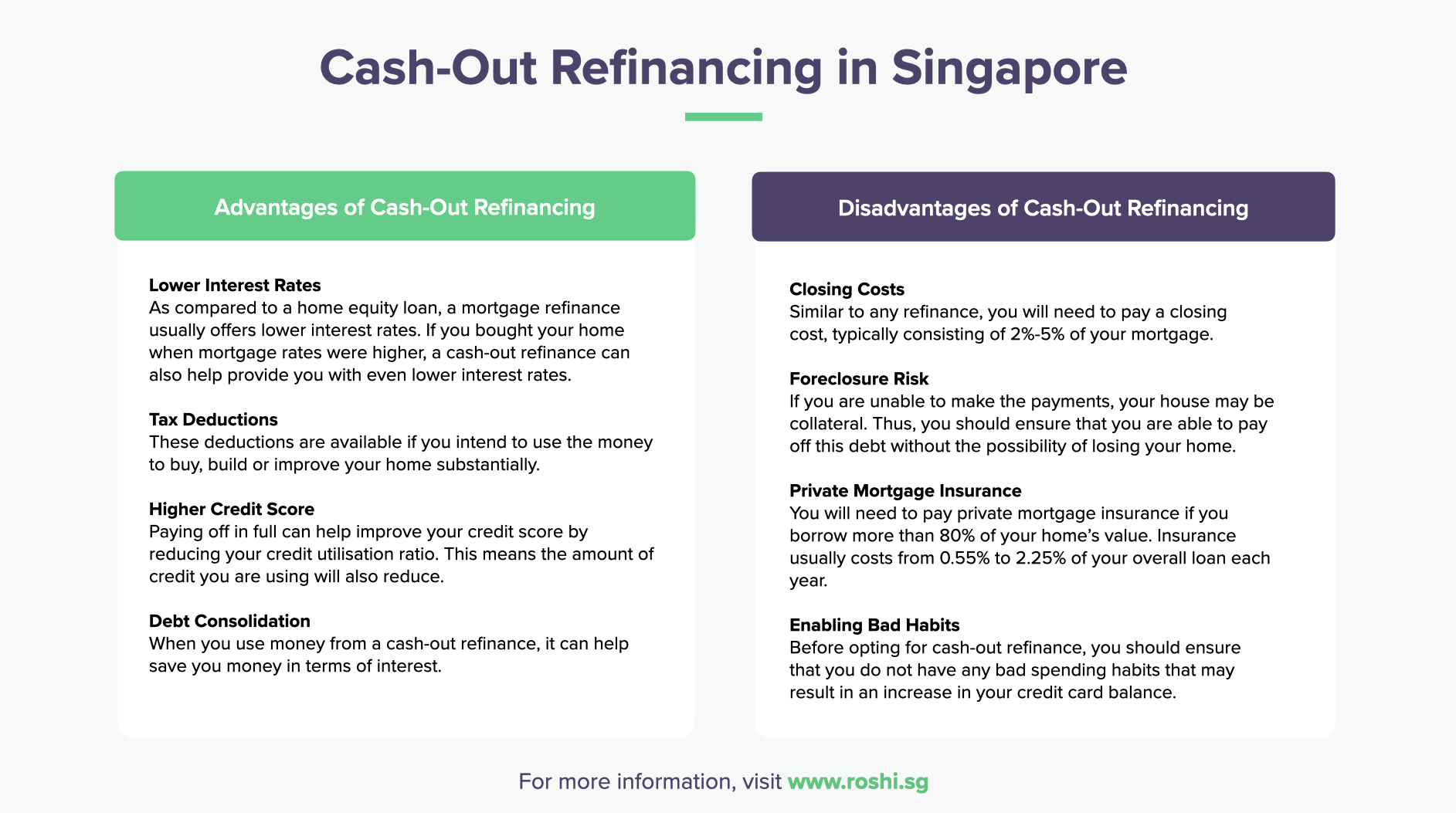
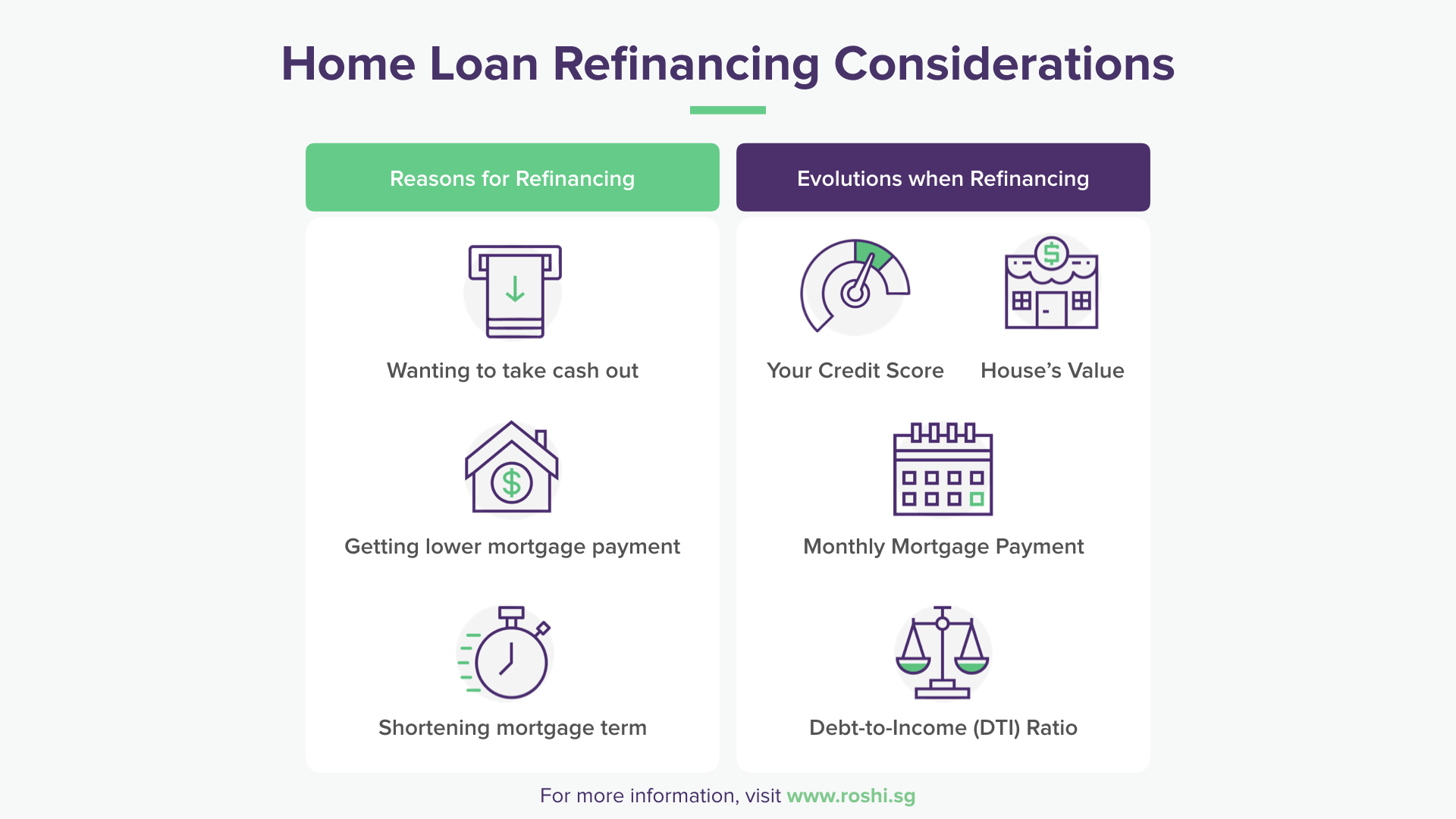
A home equity loan allows private property owners to borrow against the equity built up in their property which is the difference between the property's current market value and the outstanding mortgage. Also known as cash out refinancing, term loan or mortgage equity withdrawal (MWL) this secured loan provides access to large sums at mortgage level interest rates significantly lower than personal loans.

Home equity loans are available only for private properties such as condominiums, apartments, landed houses and commercial properties and are not available for HDB flats. The loan is subject to MAS regulations including the Loan-to-Value (LTV) limit of 75% and the Total Debt Servicing Ratio (TDSR) of 55%. This page explains how home equity loans work, eligibility requirements, how much can be borrowed and compares options across major banks in Singapore.

More Details

A home equity loan lets you borrow money against the value you own in your property. As you pay down your mortgage and your property appreciates, equity builds up this equity can be "cashed out" without selling the property. The loan is secured against your property which means interest rates are similar to home loan rates 2.5% to 4% p.a. rather than personal loan rates of 5% to 14% EIR. Also known as cash-out refinancing, term loan, or mortgage equity withdrawal.

  • Private property owners only (condos, apartments, landed, commercial properties)
  • Property can be fully paid or have existing mortgage
  • If mortgage exists must apply with the same bank holding the mortgage
  • Must pass TDSR assessment (total debt less than 55% of monthly income)
  • Minimum age 21 years, maximum tenure typically 75 years minus current age
  • Singaporeans, PRs and foreigners with private property ownership
  • The formula is:
  • 75% of property value minus outstanding loan minus CPF used (including accrued interest)
  • Example:
  • Property worth $2,000,000, outstanding loan $800,000, CPF used $200,000 Maximum equity loan = (75% × $2,000,000) minus $800,000 minus $200,000 = $500,000
  • Note:
  • TDSR still applies and you must have sufficient income to service the loan.
  • Home equity loans have no restrictions on usage. Common purposes include:
  • Investment (stocks, property, business)
  • Business capital or expansion
  • Major renovation or property upgrade
  • Children's education (local or overseas)
  • Debt consolidation (pay off higher interest loans)
  • Emergency funds or medical expenses
  • The bank does not monitor how funds are used after disbursement.

Disclosure

Glossary

Useful Resources

$100,000

$3,000,000

$100,000

$3,000,000

Deposit amount should be less than expected purchase price!
img
Low Interest
Rates

Home equity loans are charged at mortgage rates of 2.5% to 4% p.a. which is significantly lower than personal loans from 5% to 14% EIR or credit cards of 26% to 28%.

img
High Loan
Amount

Borrow up to 75% of property value minus outstanding loan and CPF used. Potentially hundreds of thousands or millions depending on property value.

img
Property as
Collateral

Your property secures the loan but failure to repay can result in foreclosure. Only borrow what you can comfortably service.

img
Long
Tenure

Repayment tenure up to 35 years or 75 years minus age. Longer tenure = lower monthly payment but higher total interest.

Our Expert says

Your Home Is Collateral so Borrow Responsibly

A home equity loan provides access to large sums at low interest rates but your property is on the line. Unlike an unsecured personal loan where the worst outcome is credit damage, failing to repay a home equity loan can result in your home being repossessed and sold by the bank.

Before cashing out equity, ask yourself, can I comfortably service this additional debt if my income drops? Am I using these funds for something that generates returns (investment, business) or something consumable (holiday, car)? The lowest cost loan is still expensive if it puts your home at risk. Quote Icon

Trinh Thanh
Trinh Thanh
Head of Research
img

Tips Before Taking a Home Equity Loan

Tips for Home Equity Loan Applicants
Get multiple valuations

Different banks use different valuers meaning higher valuation means more equity available. Work with a mortgage broker who can obtain valuations from multiple banks to maximise your loan amount.

Time your application

Property values fluctuate with market conditions so applying when the market is strong can yield a higher valuation and more equity. On the flipside a market downturn may reduce available equity.

Consider refinancing together

If your mortgage lock-in has ended, combine equity extraction with refinancing to a better rate so you only pay legal fees once instead of twice.

Pay in cash, not CPF

CPF used to service your mortgage reduces equity available. If possible service your home loan in cash to preserve more equity for future extraction.

Don't over leverage

Only extract equity for purposes that generate returns or are truly necessary.

Have an exit strategy

If using funds for investment, what's your timeline? If for business, what's the expected return?

Alternatives to Home Equity Loans

Other Ways to Access Property Value
A home equity loan isn't the only option consider these alternatives:
Sell and Downgrade

If you don't need to retain the property, selling and purchasing a smaller home releases capital without ongoing loan obligations. No interest cost but transaction costs (BSD, agent fees) and emotional attachment may be factors.

Rent Out Property

Generate income from your property without borrowing. Rental yields of 3% to 4% can supplement income or service existing mortgage, freeing up cash flow for other needs.

Personal Loan

For smaller amounts of $50,000 to $200,000, a personal loan may be simpler despite higher interest rates of 5% to 14% EIR. No property risk, faster approval and no legal fees.

Reverse Mortgage

For seniors 65+, a reverse mortgage allows you to receive regular payouts or a lump sum against your property, with no monthly repayments required. The loan is repaid when you sell, move out or pass away.

Private Bridging Loan

If TDSR blocks bank approval, private lenders offer short-term of 6 to 24 months asset backed loans at higher rates of 7% to 10% p.a.. Useful as bridge to bank financing or property sale.

img
  • 10+ banks compared
  • $2.5B+ mortgages facilitated
  • MAS verified lenders only

$100,000

$3,000,000

$100,000

$3,000,000

Deposit amount should be less than expected purchase price!

Master All Your Home Loan Moves

Compare Home Equity Loan Rates

Home equity loans are charged at the same rates as home loans.
Compare packages across banks below
Bank Scheme Lock In Period 1st Yr Interest 2nd Yr Interest 3rd Yr Interest 4th Yr Interest
Standard Chartered 1-Month SORA 0 year 1.22% 1.2243% 1.2243% 1.2243%
DBS FHR6 (Easy Switch) 0 year 1.25% 1.25% 1.3% 1.3%
DBS 3-Month SORA 0 year 1.28% 1.2798% 1.2798% 1.2798%
DBS FHR6 (Easy Switch) 0 year 1.28% 1.28% 1.3% 1.3%
DBS 3-Month SORA 0 year 1.31% 1.3098% 1.3098% 1.3098%
DBS FHR6 (Easy Switch) 0 year 1.30% 1.3% 1.33% 1.33%
DBS 3-Month SORA 0 year 1.33% 1.3298% 1.3298% 1.3298%
DBS 3-Month SORA 0 year 1.38% 1.3798% 1.3798% 1.3798%
Standard Chartered 1-Month SORA 2 years 1.27% 1.2743% 1.4243% 1.6243%
Maybank 3-Month SORA 0 year 1.33% 1.3298% 1.3298% 1.6298%
Bank Scheme Lock In Period 1st Yr Interest 2nd Yr Interest 3rd Yr Interest 4th Yr Interest
Standard Chartered 1 Year Fixed 2 years 1.40% 1.4243% 1.4743% 1.5743%
Standard Chartered 2 Year Fixed Flexi 2 years 1.45% 1.45% 1.4743% 1.5743%
Promotion 1 Year Fixed 2 years 1.40% 1.3798% 1.4298% 1.7798%
Promotion 1 Year Fixed 2 years 1.43% 1.3798% 1.4298% 1.7798%
Promotion 1 Year Fixed 2 years 1.45% 1.3798% 1.4298% 1.7798%
Standard Chartered 1 Year Fixed 2 years 1.60% 1.4243% 1.4743% 1.5743%
Standard Chartered 1 Year Fixed 2 years 1.70% 1.4243% 1.4743% 1.5743%
Standard Chartered 2 Year Fixed 2 years 1.60% 1.6% 1.4743% 1.5743%
Promotion 1 Year Fixed (With 200K Deposit) 2 years 1.43% 1.3743% 1.4243% 2.0243%
Promotion 1 Year Fixed 2 years 1.43% 1.3743% 1.4243% 2.0243%
*All banks verified against the MAS registry. Last updated: March 3 2026.

How Home Equity Works

Equity builds over time through mortgage repayment and property appreciation.
When you buy a property, your equity starts at your down payment. Over time, equity increases through:
Mortgage Repayment
Each monthly payment reduces your outstanding loan balance.
Property Appreciation
If market value rises, your equity grows automatically.
Combination
Both factors compound over time to maximize your cash out potential.
Equity Growth Over Time Example
Property Value Outstanding Loan CPF Used Equity Available
Purchase$1,500,000$1,125,000 (75% LTV)$100,000$0
Year 5$1,700,000$1,000,000$150,000$125,000
Year 10$2,000,000$800,000$200,000$500,000
Year 15$2,200,000$550,000$250,000$850,000
Fully Paid$2,500,000$0$300,000$1,575,000
HOW IT'S CALCULATED
Equity available = (75% of Current Property Value) — Outstanding Loan — CPF Used

How Much Can You Borrow

The formula determines your maximum loan but TDSR may further limit the amount.
The Formula
YOUR MAXIMUM
Equity Loan
=
75% of
Current Market Value
Deduct Mortgage
Outstanding Loan
Deduct CPF Usage
Total CPF Used
Worked Example
ComponentAmount
Current property valuation$2,000,000
75% of valuation$1,500,000
Outstanding mortgage$600,000
CPF used (principal + accrued interest)$250,000
Maximum home equity loan$650,000
TDSR Check:
Even if the formula allows $650,000 you must pass TDSR:
At 4% stress test rate a $650,000 loan over 25 years = $3,430 per month
Your gross monthly income must be at least $6,240 so $3,430 is less than 55% of your income
Existing debts (car loan, credit cards) further reduce capacity
Online Calculator
Use our mortgage calculator to estimate your home equity loan amount based on property value, outstanding loan, and income.

Home Equity Loan Costs & Fees

Beyond interest, factor in these upfront and ongoing costs.
Amount Notes
Legal Fees$2,500 to $4,000Conveyancing for loan documentation
Valuation Fee$300 to $700Bank-appointed valuer assesses property
Processing Fee$0 to $500Some banks waive this
Stamp DutyVariesOnly if increasing loan amount above existing mortgage
Early Repayment Penalty1.5% of amount repaidIf repaying within lock-in period
Lock-In Period2 to 3 years typicalPenalty applies if exiting early
Is It Worth It?
For small amounts usually under $100,000 fees can represent 3% to 4% of the loan making it less cost effective. Home equity loans are most efficient for larger amounts from $200,000 plus where fees are a smaller percentage.
Is It Worth It?
For small amounts usually under $100,000 fees can represent 3% to 4% of the loan making it less cost effective. Home equity loans are most efficient for larger amounts from $200,000 plus where fees are a smaller percentage.
Timeline:
Even if the formula allows $650,000 you must pass TDSR:
Application to approval: 2 to 4 weeks
Approval to disbursement: 4 to 8 weeks

Home Equity Loan Eligibility

Property Requirements
  • Private property only (condos, apartment, landed or commercial property)
  • HDB flats are NOT eligible for home equity loans
  • Property must be in Singapore
  • Freehold or leasehold (remaining lease affects maximum tenure)
Borrower Requirements
  • Aged 21 years and above
  • Singapore Citizen, Permanent Resident or foreigner with property ownership
  • Pass TDSR assessment (total monthly debt less than 55% of gross monthly income)
  • Satisfactory credit score with no recent defaults
TDSR Exemptions
If you borrow up to 50% of property value only (instead of 75%), TDSR does not apply.
This is useful for:
  • Retirees with limited income but substantial property value
  • Self-employed with irregular income documentation
  • Those with high existing debt obligations
LTV Limits
Property Status Maximum LTV
First mortgage, no existing property loan75%
Second mortgage (already have another property loan)45%
Borrowing without TDSR assessment50%
icon CPF Restriction
You cannot cash out the CPF portion of your equity. The formula deducts all CPF used (principal plus accrued interest) from the maximum loan amount. This prevents using home equity loans to indirectly withdraw CPF funds.
Our Expert says

Your Home Is Collateral so Borrow Responsibly

A home equity loan provides access to large sums at low interest rates but your property is on the line. Unlike an unsecured personal loan where the worst outcome is credit damage, failing to repay a home equity loan can result in your home being repossessed and sold by the bank.

Before cashing out equity, ask yourself, can I comfortably service this additional debt if my income drops? Am I using these funds for something that generates returns (investment, business) or something consumable (holiday, car)? The lowest cost loan is still expensive if it puts your home at risk. Quote Icon

Trinh Thanh
Trinh Thanh
Head of Research
img

Tips Before Taking a Home Equity Loan

Tips for Home Equity Loan Applicants
Get multiple valuations

Different banks use different valuers meaning higher valuation means more equity available. Work with a mortgage broker who can obtain valuations from multiple banks to maximise your loan amount.

Time your application

Property values fluctuate with market conditions so applying when the market is strong can yield a higher valuation and more equity. On the flipside a market downturn may reduce available equity.

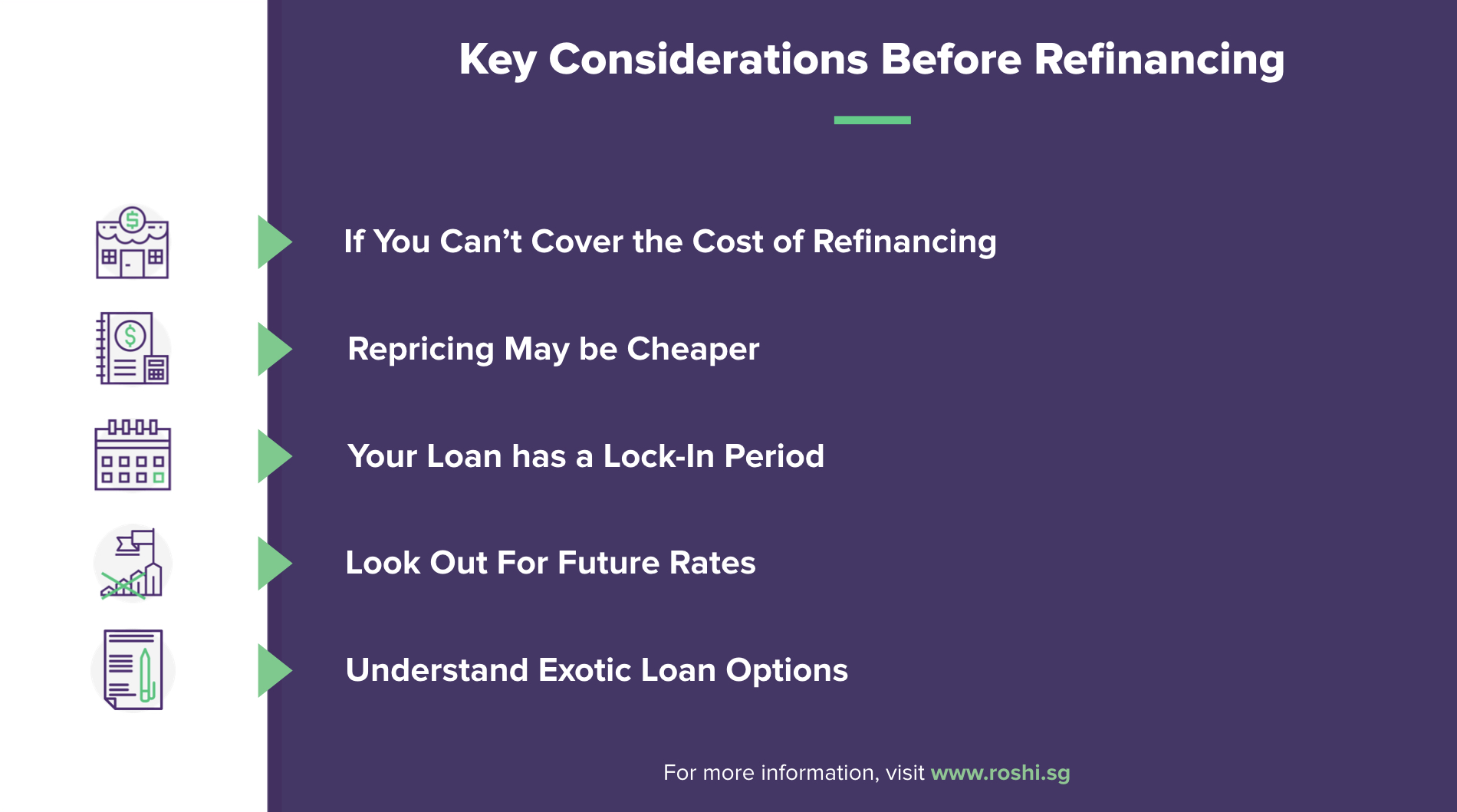
Consider refinancing together

If your mortgage lock-in has ended, combine equity extraction with refinancing to a better rate so you only pay legal fees once instead of twice.

Pay in cash, not CPF

CPF used to service your mortgage reduces equity available. If possible service your home loan in cash to preserve more equity for future extraction.

Don't over leverage

Only extract equity for purposes that generate returns or are truly necessary.

Have an exit strategy

If using funds for investment, what's your timeline? If for business, what's the expected return?

Alternatives to Home Equity Loans

Other Ways to Access Property Value
A home equity loan isn't the only option consider these alternatives:
Sell and Downgrade

If you don't need to retain the property, selling and purchasing a smaller home releases capital without ongoing loan obligations. No interest cost but transaction costs (BSD, agent fees) and emotional attachment may be factors.

Rent Out Property

Generate income from your property without borrowing. Rental yields of 3% to 4% can supplement income or service existing mortgage, freeing up cash flow for other needs.

Personal Loan

For smaller amounts of $50,000 to $200,000, a personal loan may be simpler despite higher interest rates of 5% to 14% EIR. No property risk, faster approval and no legal fees.

Reverse Mortgage

For seniors 65+, a reverse mortgage allows you to receive regular payouts or a lump sum against your property, with no monthly repayments required. The loan is repaid when you sell, move out or pass away.

Private Bridging Loan

If TDSR blocks bank approval, private lenders offer short-term of 6 to 24 months asset backed loans at higher rates of 7% to 10% p.a.. Useful as bridge to bank financing or property sale.

How To Apply for a Home Equity Loan

Assess your equity
Estimate your property's current value (check recent transactions for similar units), subtract outstanding loan and CPF used. This will give you your maximum borrowable amount.
step-icon
Check TDSR capacity
Calculate if your income can support the additional loan. Total monthly debt payments including this new loan must not exceed 55% of gross monthly income.
step-icon
Gather documents
NRIC, income proof (payslips, NOA, CPF statements), existing mortgage statements, property title/OTP and CPF usage statement.
step-icon
Approach your bank
If you have an existing mortgage, you must approach the same bank. If fully paid, you can compare across all banks.
step-icon
Property valuation
The bank will appoint a valuer to assess current market value. This determines your maximum loan amount.
step-icon
Loan approval
Bank reviews application, runs credit check, confirms TDSR compliance. Approval takes between 2 to 4 weeks.
step-icon
Legal completion & disbursement
Sign loan documents with appointed lawyers. Funds are disbursed to your bank account 2 to 4 weeks after legal completion.
step-icon

Finding the Right Home Equity Loans (FAQs)

Can I get a home equity loan on my HDB flat?

Home equity loans are only available for private properties such as condos, apartments, landed houses and commercial properties. HDB flats cannot be used as collateral for equity extraction.
The maximum is 75% of your property's current market value, minus your outstanding mortgage and all CPF used including accrued interest. The actual amount is also limited by TDSR; your income must support the monthly repayments.
If you have an existing mortgage, you must approach the same bank for a home equity loan but if your property is fully paid you can approach any bank.
TDSR (Total Debt Servicing Ratio) requires that your total monthly debt payments do not exceed 55% of your gross monthly income. Banks stress test at 4% interest rate so if you don't pass TDSR you can still borrow up to 50% of property value without TDSR assessment.
CPF can only be used for property purchase and existing mortgage repayment but not for home equity loans or term loans.
Typically 2 to 4 months from application to receiving funds this includes property valuation (1 to 2 weeks), loan approval (2 to 4 weeks) and legal completion (4 to 8 weeks).
Home equity loans are charged at home loan rates currently around 2.5% to 4% p.a. depending on the package fixed or SORA linked floating. This is significantly lower than personal loan rates of 5% to 14% EIR.
Foreigners who own private property in Singapore can apply however the same LTV and TDSR rules apply. Some banks have additional requirements for foreign applicants.
Most banks have minimum loan amounts of $100,000 to $200,000 for home equity loans. Given the legal fees involved, smaller amounts may not be cost effective.
If your property value drops significantly, your equity decreases. In extreme cases you could be in "negative equity" where the loan exceeds property value which might lead the bank to require additional security or partial repayment.
After the lock-in period ends you can refinance your home equity loan to another bank for better rates just like refinancing a regular home loan.
If declined due to TDSR, you still have options:
  1. Borrow only up to 50% of property value no TDSR required
  2. Wait until you have less debt
  3. Approach private lenders who assess on property value rather than income

What Are the Pros & Cons of Home Equity Loan?

PROS

  • Access large sums potentially hundreds of thousands at low mortgage rates
  • Interest rates of 2.5% to 4% significantly lower than personal loans of 5% to 14% or credit cards of 26% to 28%
  • Long tenure up to 35 years keeps monthly payments manageable
  • No restrictions on how funds are used
  • Interest may be tax-deductible if used for investment or business
  • Retain property ownership and potential appreciation

CONS

  • Property is collateral failure to repay can result in foreclosure
  • Only available for private properties (not HDB)
  • Subject to TDSR which requires sufficient income to qualify
  • Legal fees of $2,500 to $4,000 and valuation costs add to expense
  • Long processing time of 2 to 4 months from application to disbursement
  • CPF used cannot be cashed out reduces available equity
  • If property value drops, equity may become negative

Our customers trust us when it comes to making important borrowing decisions

Google Logo Aya Medel
Star Star Star Star Star
4 months ago

I used ROSHI platform to find the best loan offers. Just need to fill up some details and wait for loan offers and can choose which one you like. It is totally free and can receive vouchers and cashback based on the loan amount approved. Thank you ROSHI

Google Logo Everlean
Star Star Star Star Star
8 months ago

I can’t thank Roshi enough for helping me find the best financial institution for my DCP! The guidance and support were absolutely amazing—everything was explained clearly and tailored to my needs. Thanks to Roshi’s help, I’m now on track and completely debt-free in just 12 months! 💪🏼 I couldn’t be happier with the outcome and highly recommend Roshi to anyone looking for smart, reliable financial advice.

Google Logo Mohamed Faizal Jaafar
Star Star Star Star Star
7 months ago

With the help of the ROSHI Support link to partner, I had a great experience with EZY Loan. The online application was simple, document verification was fast, and the funds were credited on the same day. The staff were professional and explained everything clearly, with no hidden fees. Overall, an excellent and hassle-free service!

Google Logo Sabby Debbie
Star Star Star Star Star
7 months ago

Roshi service will update all your listings to match your nearest requested amount accurately, saving you time and effort by eliminating the need to visit each location individually. Recommended !

Explore Our Range of
Relevant Expert Guides

Explore Other Home Loan Options

A home equity loan unlocks the value in your existing property but depending on your situation, other home financing options may be relevant. For investors purchasing a new property, comparing home loans across 15+ banks helps secure the most competitive rates.

Property owners approaching lock-in end can explore refinancing to reduce monthly repayments or switch to a better rate structure.

Our mortgage calculator estimates monthly repayments for different loan amounts and tenures. Our refinance calculator shows potential savings from switching lenders.

For bank specific home loan packages and features, reviews are available for local banks from DBS, OCBC, UOB, Maybank and foreign banks such as HSBC, Standard Chartered, Citibank, CIMB, Bank of China.